Curaçao’s SER Calls for AI That Benefits Workers
WILLEMSTAD, October 2, 2026 — A young person applying for a job in tourism may already have been assessed by an algorithm before an employer reads the application. For that applicant, artificial intelligence (AI) is immediately a matter of opportunity and fair treatment. Curaçao’s Social and Economic Council (SER) used this example to highlight AI’s impact on people at an international summit in Zimbabwe.
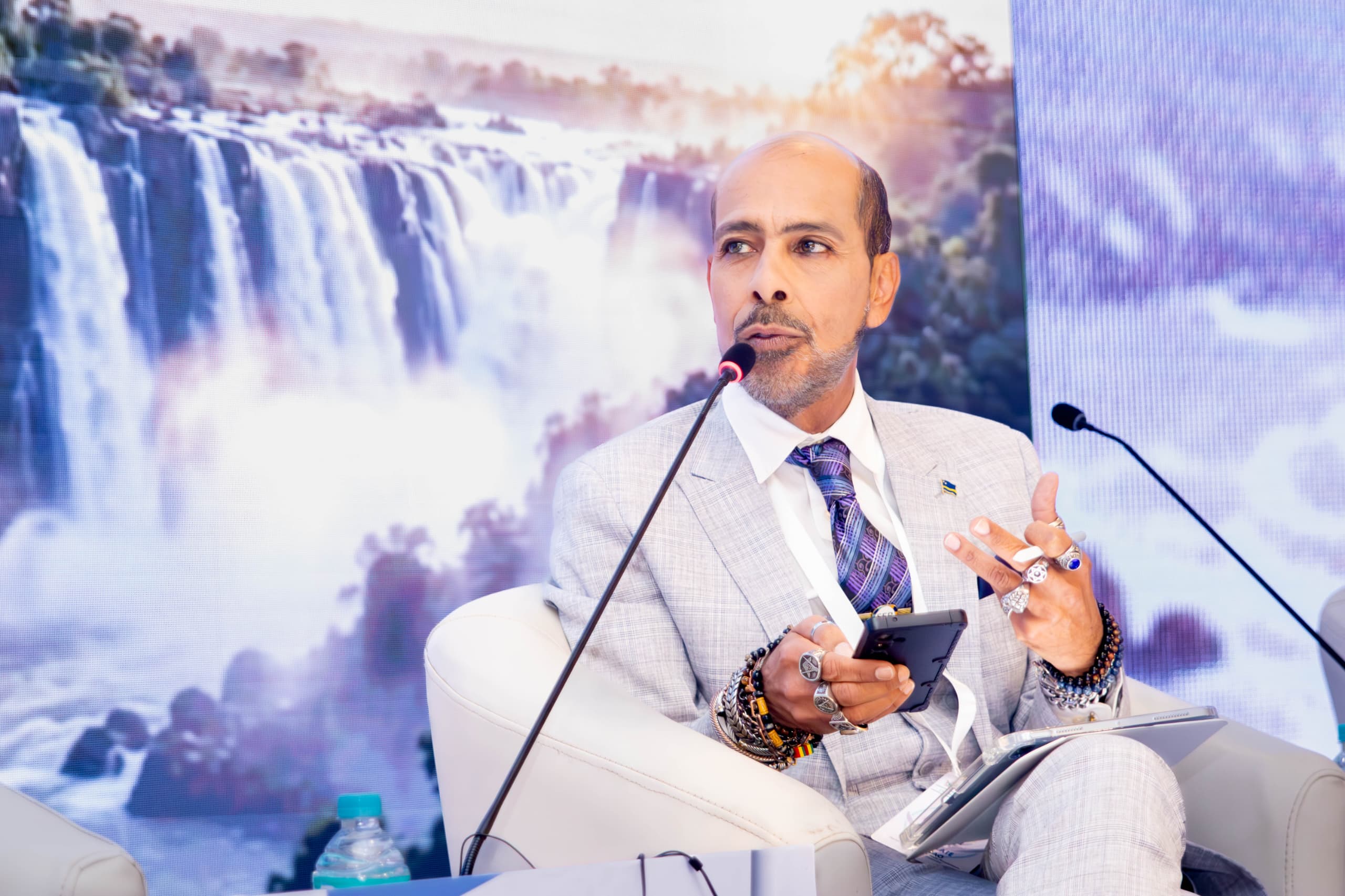
At the invitation of the Tripartite Negotiating Forum (TNF), drs. Raul Henriquez, the SER’s director and secretary general, attended the Zimbabwe TNF Global Summit in Victoria Falls from September 21 to 25. He represented the SER’s acting chairman, Mr. John Jacobs LL.M. The TNF, Zimbabwe’s forum for dialogue among government, employers and workers, brought together international participants to discuss economic development, decent work and investment.
For the SER, those exchanges are relevant to its role in advising Curaçao’s government and Parliament. Experiences abroad can help the council assess proposals for Curaçao more closely — whether training reaches employees of small businesses, for example, and how productivity gains can contribute to better conditions for workers. Curaçao’s own circumstances remain central to that assessment.
During the panel ‘AI, Automation & the Jobs of Tomorrow’ Henriquez called for accessible training and consultation with workers before technological investments change their jobs. “AI is an instrument; the impact on human beings matters,” he said. Businesses need to be able to choose suitable technology. Workers need opportunities to learn how to handle new tasks and to know who is accountable for decisions affecting their work.
Research by the International Labour Organization (ILO) provides context for that focus on changing work. According to a 2025 study, roughly one in four workers worldwide is in an occupation with tasks that could be affected by generative AI. The figures describe potential changes in tasks; it is not a forecast for job losses.
Tourism provided a practical link between Curaçao and Victoria Falls. Curaçao recorded more than 788,000 overnight visitor arrivals in 2025, according to the Curaçao Tourist Board (CTB). Henriquez emphasized that Curaçao’s ambition to become a smart and sustainable tourism destination should translate into benefits for residents and local businesses. In both Curaçao and Victoria Falls, sustaining tourism revenue depends in part on protecting nature and cultural heritage.
A small hotel could use more accurate booking forecasts to plan purchases from local suppliers more effectively and reduce food waste. Digital tools could help an independent tour guide reach customers directly. Henriquez presented these applications as possibilities to explore locally, with attention to costs, skills and the effects on work.
The exchanges also offered concrete points of comparison. The representative of Luxembourg’s advisory council described how AI can help analyze climate risks while people remain responsible for financing decisions. That distinction between technological assistance and human responsibility also matters to the SER when assessing policy and legislation.
The participation builds on the SER’s attention to the future of work, including its 2023 manifesto and its 2025 AI seminar. The council previously held the presidencies of AICESIS, the International Association of Economic and Social Councils and Similar Institutions, and CESISALC, the Latin American and Caribbean network of Economic and Social Councils and Similar Institutions.
The summit concluded with the Outcomes of the Victoria Falls TNF Summit. The SER has expressed its willingness to explore further exchanges with the TNF, including skills and the social consequences of technological change. Smart and sustainable tourism offers common ground for that work.
Henriquez called for assessments of such innovation to consider workers’ earnings, local purchasing and the use of scarce resources. For Curaçao, that approach could help connect economic growth with residents’ economic security.